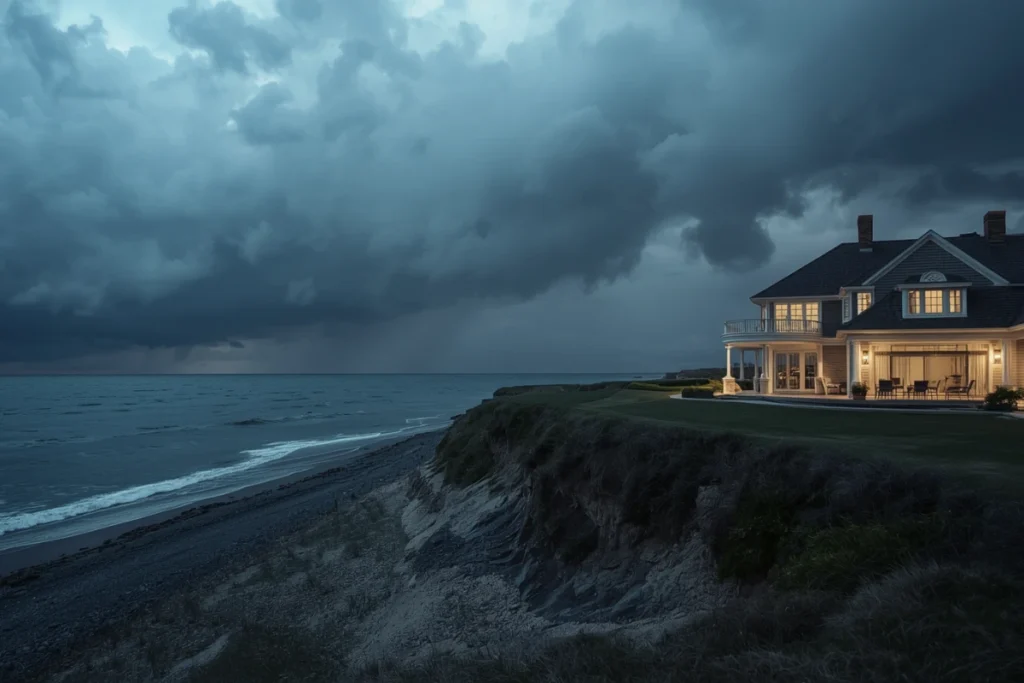
Owning a home in the Hamptons offers access to one of the most desirable coastal regions in the United States, but it also introduces a layered set of environmental and insurance risks that many homeowners underestimate.
Coastal exposure in the Hamptons is not defined solely by proximity to the ocean. Instead, it is shaped by storm behavior, elevation, drainage systems, rebuilding economics, and how insurance policies respond under catastrophic conditions.
For high-value homeowners, understanding these risks is essential to building a properly structured insurance strategy.
Coastal Risk in the Hamptons Extends Beyond Flood Zones
A common misconception is that coastal risk only applies to homes located within FEMA-designated flood zones. In reality, Hamptons properties outside of mapped flood areas can still face significant exposure.
Key coastal risks include:
- Storm surge reaching beyond mapped zones
- Wind-driven rain penetrating building envelopes
- Heavy rainfall overwhelming drainage systems
- Coastal erosion affecting property stability
- Saltwater intrusion impacting foundations and utilities
- Regional storm events increasing reconstruction costs
Flood maps are useful, but they do not fully capture how water and wind behave during major coastal storms.
The Layered Nature of Coastal Insurance Risk
Proper protection for Hamptons coastal homes requires multiple coordinated coverage layers, not a single policy.
These typically include:
- Homeowners insurance (wind, fire, structural damage)
- Flood insurance (base water damage protection)
- Excess flood insurance (critical for high-value homes)
- Umbrella liability coverage (catastrophic liability protection)
- Valuable articles coverage (art, jewelry, collections)
Each layer responds differently depending on the type and severity of loss.
When these layers are not properly coordinated, gaps can appear during high-impact events.
How Property Type Impacts Coastal Exposure
Not all Hamptons properties carry the same level of risk. Exposure varies significantly based on:
- Waterfront vs inland location
- Elevation and proximity to dunes or bays
- Construction type and materials
- Age of home and renovation history
- Seasonal vs full-time occupancy
For example, a newly constructed elevated home in Water Mill may have very different risk characteristics than a historic beachfront estate in Amagansett.
These differences directly influence both insurance structure and potential claims outcomes.
Why Coastal Risk Is Increasing in the Hamptons
Several long-term trends are contributing to rising coastal exposure:
1. More frequent severe weather events
Storm intensity and unpredictability are increasing pressure on coastal infrastructure.
2. Rising reconstruction costs
Labor shortages and material inflation continue to drive up rebuild values across the East End.
3. Evolving flood mapping and regulations
FEMA maps and local zoning requirements continue to shift over time.
4. Increased demand for coastal living
Higher property values and development density amplify total exposure.
Together, these factors mean that historical insurance structures may no longer reflect current risk.
The Private Client Perspective
For high-net-worth homeowners, coastal risk management is not about purchasing a single policy. It is about building a coordinated insurance strategy that accounts for:
- Property value and rebuild cost accuracy
- Multi-layer catastrophe protection
- Liability exposure across assets and properties
- Seasonal occupancy behavior
- Long-term asset protection strategy
This is the foundation of a properly structured Private Client insurance program.
To learn more about protecting high-value homes and lifestyle assets, explore our Hamptons Insurance Guide.
Related Articles
About Philip Moroch, CPRM
 Phil Moroch serves as Vice President of Private Client Services at Wheeler & Taylor Private Client Group and holds the Certified Personal Risk Manager (CPRM) designation. He specializes in advising high-net-worth individuals and families on coordinated insurance strategies across luxury residences, coastal properties, secondary homes, valuable collections, yachts, private aviation exposures, and excess liability protection. Phil works with clients whose insurance portfolios have often become fragmented across multiple carriers and policies over time. His role is to bring structure and clarity to those programs by aligning coverage across all assets, identifying gaps or overlaps, and building a more efficient and cohesive risk management strategy.
With access to leading private client insurance markets, Phil helps design tailored coverage programs that reflect the complexity of modern wealth, including multi-property ownership, lifestyle exposures, and evolving liability risks. He works with clients throughout New York, the Hamptons, Connecticut, Massachusetts, Florida, and nationwide through Wheeler & Taylor Private Client Group.
Private Client Advisory Contact
For private client insurance guidance and portfolio reviews:
📞 (914) 315-7054
✉️ pmoroch@wheelertaylor.com
Confidential consultations available by request.