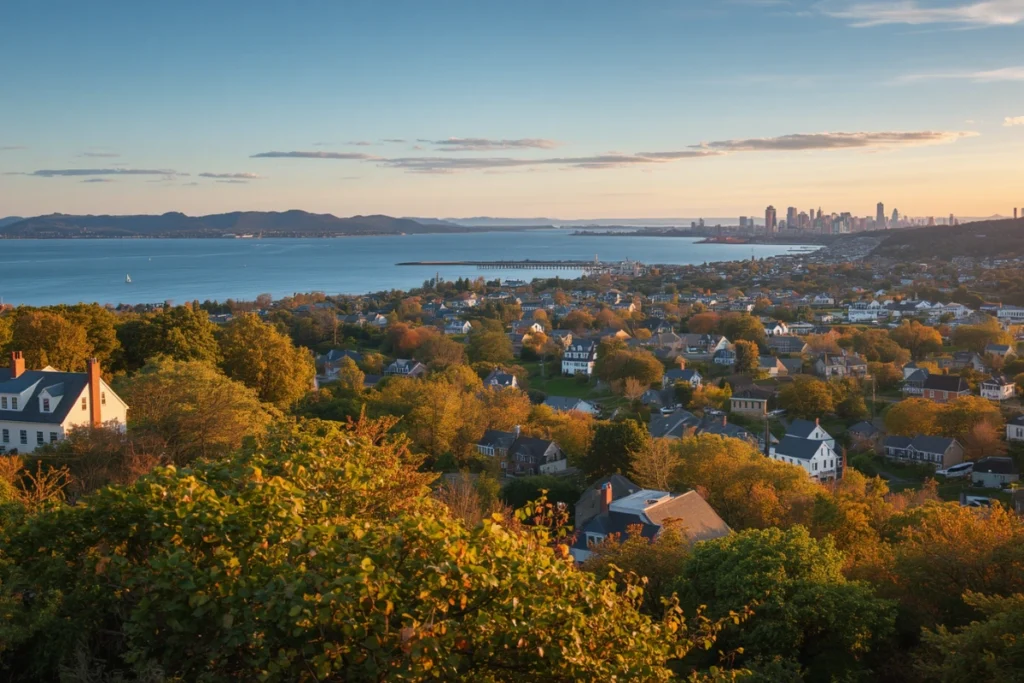
Insurance is often treated as a standardized product—home, auto, umbrella, property. But across the Northeast, that assumption breaks down quickly.
From coastal estates in Rhode Island to historic homes in Massachusetts, mountain retreats in Vermont, lake properties in New Hampshire, urban residences in New York and New Jersey, and rural estates across Connecticut and Pennsylvania, no two risk profiles are truly alike.
The Northeast is one of the most structurally diverse insurance environments in the country. Geography, architecture, weather volatility, property age, and wealth concentration all intersect in ways that make a uniform insurance approach ineffective for high-net-worth households..
Understanding these differences is essential to building a coordinated Private Client insurance strategy.
The Northeast Is Not One Risk Environment—It’s Many
One of the most common misconceptions in personal insurance planning is treating the Northeast as a single market.
In reality, it contains multiple distinct risk regions:
- Coastal exposure zones along the Atlantic shoreline
- Historic property corridors in New England
- High-density urban liability environments in New York and New Jersey
- Mountain and rural regions across Vermont and New Hampshire
- Lakefront and seasonal property markets across Maine and upstate regions
Each of these environments introduces different exposures that directly impact coverage structure, underwriting, and claims outcomes.
A homeowner in coastal Connecticut does not face the same risk profile as a homeowner in downtown Boston or rural Vermont.
Coastal Exposure Changes the Insurance Equation
Coastal properties across states like Connecticut, Rhode Island, Massachusetts, and Maine face a unique combination of environmental risks.
These may include:
- Windstorm exposure from nor’easters and hurricanes
- Salt air deterioration affecting materials and systems
- Storm surge and flood-related losses
- Higher reconstruction complexity in shoreline communities
- Limited contractor availability following catastrophic events
Even when flood insurance is not required, coastal proximity can still influence underwriting, pricing, and coverage structure.
The result is a more complex insurance environment where standard homeowners policies are often insufficient on their own.
Historic Homes Require Specialized Insurance Thinking
The Northeast contains some of the oldest housing stock in the United States.
Communities throughout Massachusetts, Connecticut, Rhode Island, and New Hampshire often include homes that are:
- 100 to 300+ years old
- Built with non-standard materials and methods
- Subject to preservation or restoration requirements
- Difficult to replicate using modern construction pricing models
In these cases, replacement cost is not simply a mathematical estimate. It often requires:
- Specialized craftsmanship
- Historic restoration expertise
- Custom materials
- Code upgrade compliance
This creates a meaningful gap between market value, insured value, and actual rebuild cost if not reviewed regularly.
Urban and Suburban Density Drives Liability Exposure
In contrast, urban areas such as New York City, northern New Jersey, and parts of Boston introduce a different risk profile entirely.
Here, the primary concern is often not property replacement—but liability.
Common exposures include:
- Higher guest frequency and social activity
- Increased interaction with contractors, staff, and service providers
- Greater legal exposure from accidents or injuries
- Shared building systems in condominiums and cooperatives
- Higher-value litigation environments
In these settings, umbrella liability coverage becomes just as important as property insurance—sometimes more so.
Seasonal and Secondary Homes Create Fragmented Risk
Across the Northeast, multi-property ownership is common among affluent households.
A typical portfolio may include:
- A primary residence in Connecticut or New Jersey
- A summer home on Cape Cod or coastal Maine
- A ski or mountain property in Vermont or New Hampshire
- A city residence in Boston or New York
Each property operates under different:
- Underwriting guidelines
- Carrier relationships
- Replacement cost assumptions
- Exposure conditions
- Vacancy or seasonal usage patterns
Without coordination, this creates fragmentation—where coverage is technically present, but not strategically aligned.
Weather Volatility Is Region-Specific, Not Uniform
The Northeast experiences a wide range of weather patterns that vary significantly by geography.
Examples include:
- Coastal storm surge and hurricane remnants along the shoreline
- Heavy snow loads and freeze-thaw cycles inland and in mountain regions
- Ice damming and roof collapse risks in northern New England
- Flooding from river systems and inland rainfall events
- Urban drainage and sewer backup exposure in dense cities
Each of these risks requires different mitigation strategies and policy considerations.
A single insurance structure rarely accounts for all of them effectively without customization.
Construction Costs and Labor Availability Differ by Region
Rebuilding a home in the Northeast is not a standardized process.
Cost variability is driven by:
- Local contractor availability
- Skilled labor shortages in rural and seasonal areas
- Material transport logistics
- Regional permitting and code requirements
- Demand surges following severe weather events
A home in coastal Rhode Island may carry significantly different reconstruction dynamics than a similar-sized home in inland Pennsylvania or Vermont.
This directly impacts replacement cost accuracy and long-term coverage adequacy.
Valuation Drift Happens Faster in High-Value Markets
Across the Northeast’s luxury and high-net-worth markets, property values and asset portfolios evolve continuously.
This includes:
- Rising real estate values in coastal and suburban markets
- Appreciation of fine art, jewelry, and collectibles
- Expansion of multi-property ownership
- Home renovations and lifestyle upgrades
If insurance policies are not updated regularly, valuation drift occurs—where coverage no longer reflects real exposure.
This is one of the most common issues found in Private Client insurance reviews.
Why a Regional Strategy Matters More Than a Standard Policy
Because the Northeast is not a single risk profile, insurance planning must account for:
- Geography-specific exposures
- Property type variation
- Multi-residence coordination
- Liability concentration differences
- Asset valuation changes over time
A standard homeowners policy treats each property independently.
A Private Client approach treats the entire portfolio as a connected system.
Building a Coordinated Insurance Approach Across the Northeast
For high-net-worth individuals and families, the goal is not simply to insure homes.
It is to create a coordinated framework that considers:
- All residences as part of one portfolio
- Liability exposure across lifestyle and geography
- Collection and asset distribution across properties
- Regional risk differences that affect coverage structure
- Ongoing valuation updates as markets evolve
When properly structured, insurance becomes less about individual policies and more about integrated risk management.
Protecting Wealth Across a Complex Regional Landscape
The Northeast remains one of the most diverse and complex insurance environments in the country.
From coastal storm exposure to historic home reconstruction, from urban liability to seasonal property management, risk does not behave uniformly across the region.
For homeowners with significant assets and multiple residences, understanding these differences is not optional—it is foundational to effective protection.
A well-designed Private Client insurance strategy recognizes that geography is not just a backdrop to risk.
It is one of the primary drivers of how that risk must be managed.
Related Articles
About Philip Moroch, CPRM
 Phil Moroch serves as Vice President of Private Client Services at Wheeler & Taylor Private Client Group and holds the Certified Personal Risk Manager (CPRM) designation. He specializes in advising high-net-worth individuals and families on coordinated insurance strategies across luxury residences, coastal properties, secondary homes, valuable collections, yachts, private aviation exposures, and excess liability protection. Phil works with clients whose insurance portfolios have often become fragmented across multiple carriers and policies over time. His role is to bring structure and clarity to those programs by aligning coverage across all assets, identifying gaps or overlaps, and building a more efficient and cohesive risk management strategy.
With access to leading private client insurance markets, Phil helps design tailored coverage programs that reflect the complexity of modern wealth, including multi-property ownership, lifestyle exposures, and evolving liability risks. He works with clients throughout New York, the Hamptons, Connecticut, Massachusetts, Florida, and nationwide through Wheeler & Taylor Private Client Group.
Private Client Advisory Contact
For private client insurance guidance and portfolio reviews:
📞 (914) 315-7054
✉️ pmoroch@wheelertaylor.com
Confidential consultations available by request.